 TeddyChinese
Chinese Stroke Order: 8 Rules for Writing Characters
Learn the eight Chinese stroke order rules and the basic strokes, with examples like 三, 人, 月, 国 and 水, to write characters neatly and correctly.

Every Chinese character is written with the strokes in a fixed order. Following it is not just tradition. It makes characters faster to write, neater, and easier to remember, and handwriting recognition apps depend on it.
The 8 basic Chinese strokes
- 横 (héng): horizontal stroke, as in 一
- 竖 (shù): vertical stroke, as in 十
- 撇 (piě): left-falling stroke, as in 人
- 捺 (nà): right-falling stroke, as in 人
- 点 (diǎn): dot, as in 六
- 提 (tí): rising stroke, as in 冰
- 折 (zhé): turning stroke, as in 口
- 钩 (gōu): hook, as in 小
Almost every character is built from these eight shapes.
The 8 Chinese stroke order rules
- **Top to bottom.** 三 (sān): write the top line, then the middle, then the bottom.
- **Left to right.** 川 (chuān): left stroke, middle, then right.
- **Horizontal before vertical when they cross.** 十 (shí): the horizontal first, then the vertical.
- **Left-falling before right-falling.** 人 (rén) and 八 (bā): the left stroke comes first.
- **Outside before inside.** 月 (yuè) and 同 (tóng): the frame first, then what is inside.
- **Close the box last.** 国 (guó) and 回 (huí): write the sides, then the inside, then the bottom stroke.
- **Center before the sides.** 水 (shuǐ) and 小 (xiǎo): write the middle stroke first, then the left and right.
- **Small dots last.** 玉 (yù): the final dot comes after the main strokes.
Why the "close the box last" rule trips people up
Boxes look simple, but beginners often draw them in one loop. The correct order is the left side, then the top and right side, then the inside, and finally the bottom line. Practice with 口, 日 and 国.
Direction matters too
Most strokes go from left to right and from top to bottom. A good habit is to say the stroke name as you write it: héng, shù, piě, nà.
How to practice Chinese stroke order
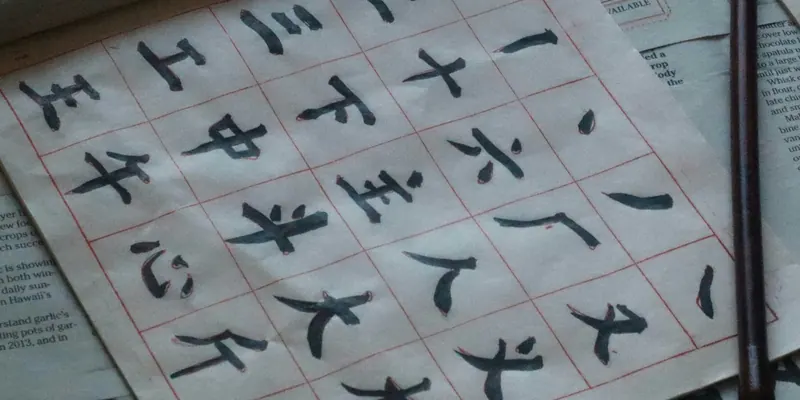
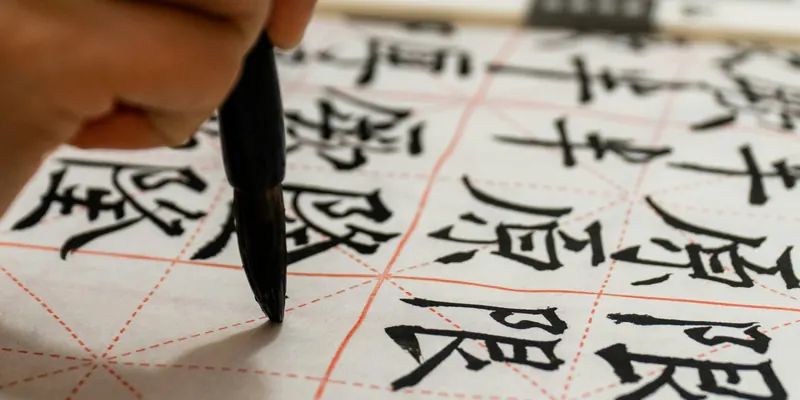
- Use grid paper (田字格), which has a cross in the middle to help you position strokes.
- Write each new character five to ten times, saying it aloud with its pinyin and meaning.
- Use an app that shows animated stroke order, then write from memory.
- Begin with the common radicals, because they appear again and again. See the most common radicals.
Do I need to learn to write by hand?
For reading, you do not strictly need handwriting, and most people type with pinyin. But a few weeks of handwriting makes characters stick, and it improves your recognition more than you would expect. Our guide to the best way to learn Chinese characters shows how to combine writing with other methods.
Frequently asked questions
Does stroke order matter in Chinese?
Yes. The correct order makes characters faster and neater to write, and handwriting input and dictionary apps depend on it.
What is the first rule of Chinese stroke order?
Write from top to bottom, and from left to right. Most other rules are refinements of these two.
How many basic strokes are there in Chinese?
There are eight basic strokes, and many characters use compound strokes that combine them, such as hooks and turns.
How can I check the stroke order of a character?
Use a dictionary or app with animated stroke order, then write the character from memory on grid paper.
Read a short graded story with pinyin, audio and tap-to-define words.
Open the LibraryStory previews at your level
Each link opens a short preview of the story. From there, open it in the Library for the full text with pinyin, English and audio.